
Manufacturing has never been more competitive. Tolerances are tighter. Lead times are shorter. And clients expect perfection the first time — every time. That is exactly why partnering with the right Industrial CNC Machining Company US is no longer just a smart move — it is a business necessity.
What Makes CNC Machining the Backbone of Modern Manufacturing?
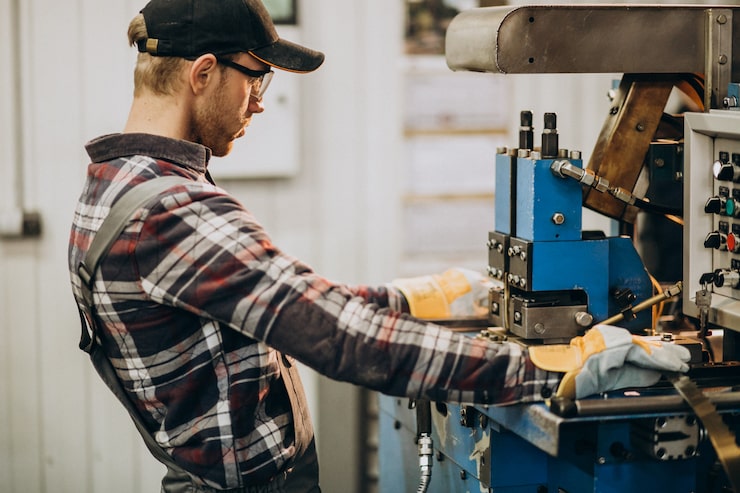
Computer Numerical Control (CNC) machining is the process where pre-programmed software controls the movement of factory tools and machinery. Think of it as giving a machine an extremely detailed instruction manual — one it follows with microscopic precision every single time.
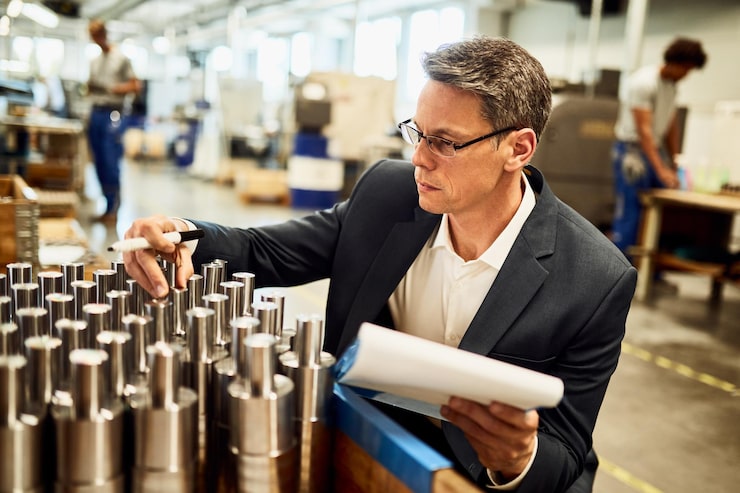
Here is an interesting fact: CNC machines can achieve tolerances as tight as ±0.001 inches. That is roughly 25 times thinner than a single human hair. For industries like aerospace or medical device manufacturing where a fraction of a millimeter can determine whether a component passes or fails inspection this level of precision is not optional — it is the baseline.
So why does it matter which company handles this work? Because not every machine shop delivers that level of consistency at scale.
Custom Parts Without Compromise
One of the biggest challenges manufacturers face is finding a shop that handles one-off prototypes just as seriously as it handles bulk production runs. A true Industrial CNC Machining Company US does not treat custom orders as an afterthought.
Whether a client needs a single titanium bracket for a robotics prototype or 50000 aluminum housings for an electronics product launch the process should remain tightly controlled from the first toolpath to the last quality check.
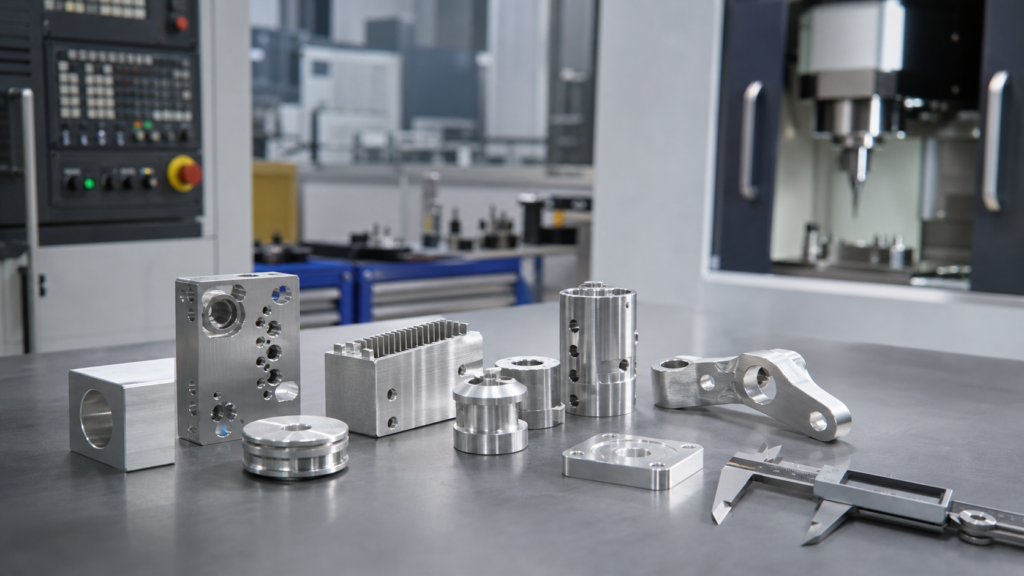
Custom CNC work typically spans a wide range of materials including stainless steel aluminum brass copper and engineering-grade plastics like PEEK and Delrin. Each material behaves differently under cutting pressure temperature and coolant exposure. The expertise required to machine each one properly separates average shops from genuinely capable manufacturers.
Bulk Production: Where Efficiency Meets Precision
Scaling production introduces an entirely different set of challenges. A design that works perfectly at 10 parts must hold exactly the same specifications at 10000 parts. How does a shop ensure that? Through a combination of proper fixturing consistent tool management statistical process control and experienced operators who catch problems before they become costly scrap.
Did you know that poor tolerancing in bulk production is one of the top hidden costs in American manufacturing? When dimensions drift even slightly across a large batch the result is not just rejected parts — it is delays rework costs and damaged supplier relationships.
A skilled Industrial CNC Machining Company US builds repeatability into the process from the start not as an afterthought at the inspection stage.
Industries That Rely on High-Precision CNC Machining
The demand for precise CNC-machined parts cuts across almost every major industry in the United States:
- Aerospace and Defense — Structural components turbine parts housings that must pass rigorous FAA and MIL-SPEC standards.
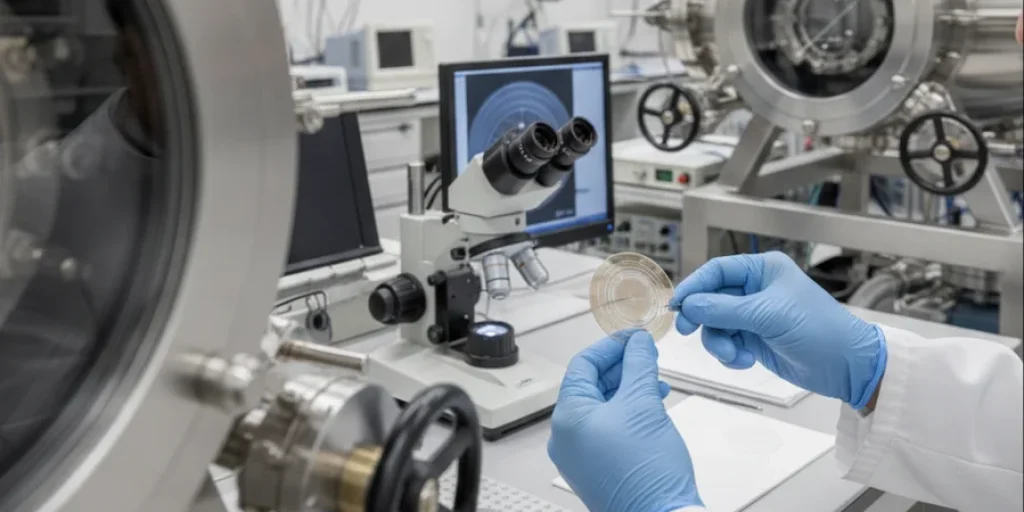
- Medical Devices — Implants surgical instruments and diagnostic equipment where surface finish and biocompatibility matter enormously.
- Automotive — Engine components transmission parts and custom fabrications for both OEM suppliers and performance aftermarket.
- Electronics and Semiconductor — Enclosures heat sinks and precision fixtures used in high-frequency and high-temperature environments.
- Oil and Gas — Valve bodies fittings and downhole tool components engineered for extreme pressure and corrosive conditions.
Each of these sectors demands something different but they all share one common requirement: a manufacturing partner that treats quality as a non-negotiable standard.
The Role of Advanced Technology in Modern CNC Shops
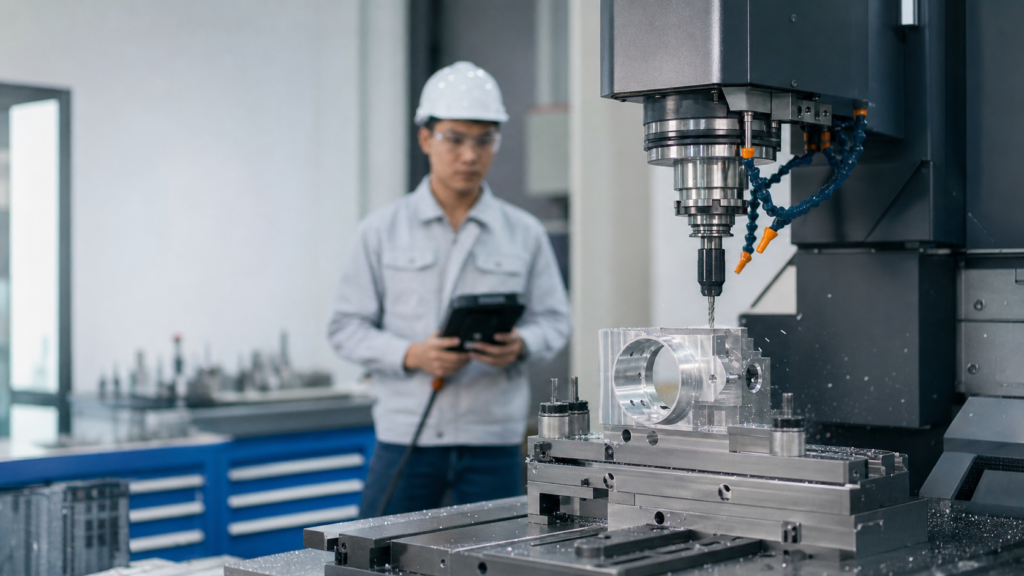
Walk into a well-equipped CNC facility today and you will not see what manufacturing looked like twenty years ago. Multi-axis machining centers — 4-axis, 5-axis and even 9-axis configurations — allow manufacturers to machine complex geometries in a single setup reducing handling time and improving dimensional accuracy across every feature.
Combined with CAD/CAM software integration, live SPC monitoring and automated tool changers the best Industrial CNC Machining Company US operations run with a level of sophistication that would have seemed like science fiction just a generation ago.
For clients this translates into faster quoting, faster setup, faster first-article approval and ultimately faster time-to-market.
Why US-Based CNC Machining Matters More Than Ever
Reshoring has become a significant trend across American manufacturing. After years of offshoring production to low-cost regions many companies discovered that the true cost of overseas manufacturing — including quality issues, shipping delays, intellectual property risks and inflexible lead times — far exceeded the per-part savings.
A domestic Industrial CNC Machining Company US offers something overseas alternatives simply cannot: proximity accountability and direct communication. When a revision is needed a domestic partner can respond in hours not weeks. When a critical batch needs to ship on a Friday afternoon a US-based shop can make that happen.
Looking for a Trusted CNC Machining Partner?
For anyone searching for a reliable Industrial CNC Machining Company US that handles both custom and high-volume production with genuine precision and professionalism consider exploring TDB Machining Tech Their capabilities align closely with the standards discussed throughout this blog — from prototype-level custom work to bulk production runs across a wide range of industries and materials.
Frequently Asked Questions
Q: What is the typical lead time for CNC machined parts in the US?
Lead times vary based on complexity and volume but most reputable US shops can deliver prototype parts within 5 to 10 business days. Bulk production timelines depend on quantity and material but domestic manufacturers generally offer significantly faster turnaround than overseas alternatives.
Q: What materials can CNC machines handle?
Modern CNC machining centers process metals including aluminum stainless steel titanium brass and copper as well as engineering plastics such as PEEK nylon Delrin and polycarbonate. Material selection depends on the application’s mechanical thermal and chemical requirements.
Q: How do I know if a CNC shop can hold the tolerances my part requires?
Ask for their process capability data (Cpk values) on previous similar jobs. Reputable shops will have documentation showing how consistently their processes perform. Certifications such as ISO 9001 or AS9100 are also strong indicators of process discipline.
Q: Is CNC machining cost-effective for small batch production?
Yes. While CNC machining does involve setup costs the economics have improved dramatically as machine setup times have shortened through better CAM software and tooling. For parts requiring tight tolerances CNC is often the most cost-effective option even at relatively low quantities.
Q: What should I send to a CNC shop to get an accurate quote?
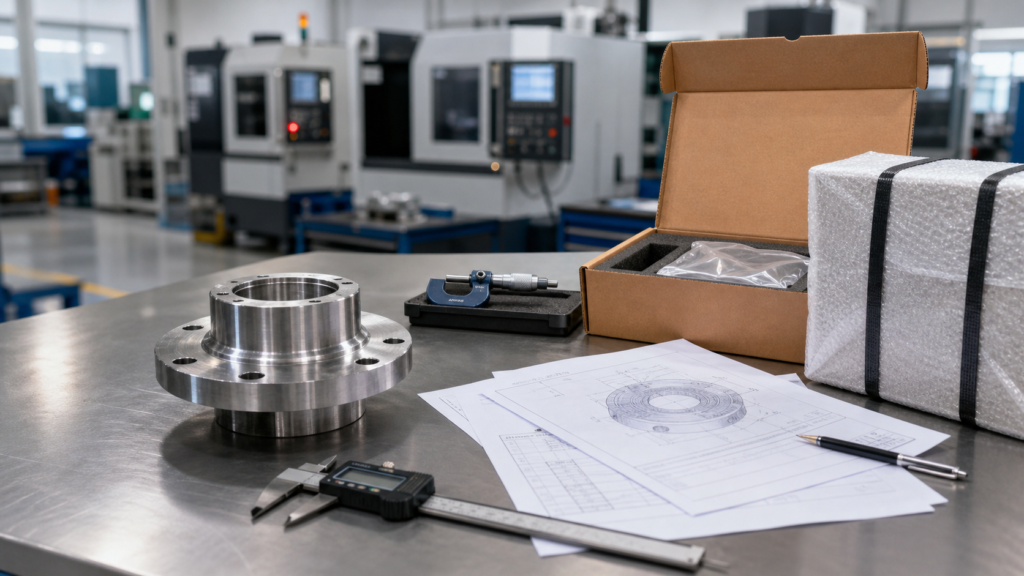
Provide a 3D CAD file (STEP or IGES format) along with a 2D drawing that specifies critical tolerances, surface finish requirements and material. The more detail you provide upfront the faster and more accurate the quote will be.