

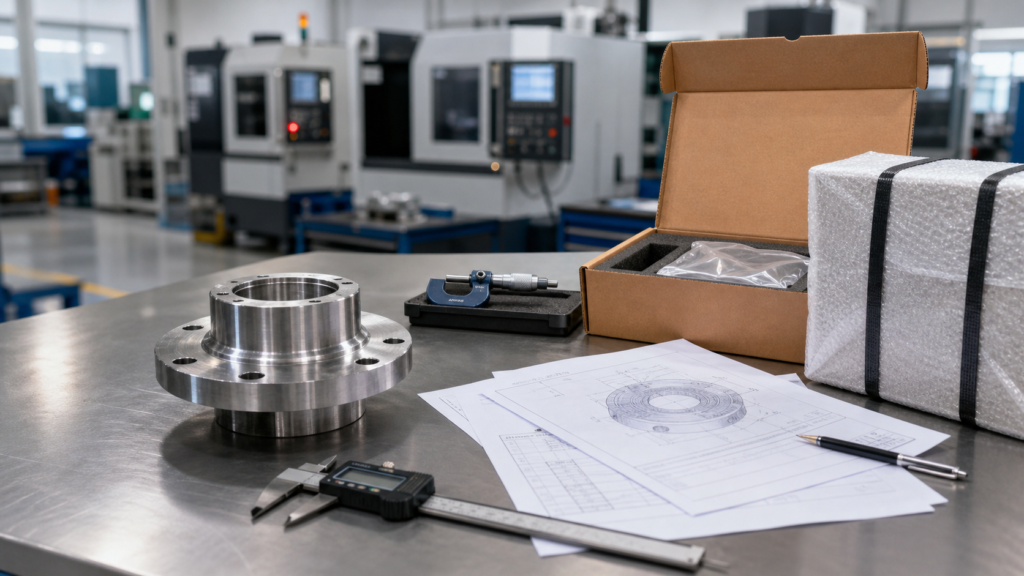
Working with an overseas CNC machining supplier should feel controlled from the first request for quotation to the final delivery. For buyers in the United States and Europe, the key is to make technical requirements, approvals, inspection, and shipping expectations visible at each stage. This guide explains a practical RFQ-to-shipment workflow for CNC machining projects in Hanoi, Vietnam.
Step 1: Build an RFQ that a machinist can quote
The quality of the quotation depends on the quality of the information supplied. Include a current 2D drawing, 3D CAD model, material specification, finish requirements, quantities, tolerances, and any special instructions. Identify dimensions that are critical to fit or function, as well as threads, surface appearance requirements, and mating-part interfaces.
Add commercial information too: target delivery date, ship-to country, preferred Incoterm, desired batch size, and whether the request is for a prototype, bridge production, or repeat production. This lets the supplier assess both manufacturability and logistics from the start.
Step 2: Review the quotation beyond the unit price
A useful CNC machining quote separates the assumptions that affect price and lead time. Check the stated material, manufacturing process, finish, quantity, tooling or setup charges, inspection approach, packaging, and freight assumptions. If two quotes differ substantially, compare scope before choosing the lowest number.
Ask the supplier to flag any drawing ambiguity, tolerance that may require a special process, or feature that raises machining risk. Early design-for-manufacturing feedback can prevent expensive changes after a purchase order has been placed.
Step 3: Confirm the production package
Before release, agree on the final drawing revision and a clear method for approving changes. The production package should include the purchase order, approved quotation, technical drawings, CAD data, quality requirements, packaging instructions, and agreed commercial terms. Avoid relying on a long email chain as the only record of what has been approved.
For parts with critical dimensions, define the measurement method and reporting expectations. For example, the buyer may request a first-article report, sample photographs, or dimension results for specific features. The right level of documentation depends on the part’s function and risk.
Step 4: Keep production communication simple and regular
International sourcing works best with a predictable update rhythm. Agree when the supplier will confirm material readiness, machining start, first-article status, finishing completion, final inspection, and shipment. Concise updates with a clear status, open question, and next action are often more useful than frequent unstructured messages.
If a change is necessary, pause and document it. A change to material, finish, tolerance interpretation, or delivery date should be acknowledged by both parties before it is implemented. This protects the buyer and gives the manufacturing team an unambiguous instruction.
Step 5: Inspect before packing
Final inspection should be matched to the part’s requirements. Confirm that part counts, visual condition, key dimensions, and required documentation are checked before dispatch. For multiple part numbers, labeling and pack separation help receiving teams verify the shipment efficiently.
Protective packaging deserves attention. Precision-machined surfaces can be damaged in transit if parts rub together or move inside a carton. Specify any corrosion protection, individual wrapping, tray use, labeling, or photo documentation needed for your program.
Step 6: Plan shipping and receiving
Select the shipping method based on urgency, weight, value, and destination. Air freight can suit urgent small consignments, while consolidated or sea freight may be more economical for heavier repeat orders. Clarify who is responsible for freight booking, export documents, insurance, import clearance, and duties under the selected Incoterm.
Before dispatch, request the packing list, commercial invoice, tracking information, and any required quality documents. At receiving, compare the shipment with the purchase order and inspect critical parts promptly so any issue can be addressed with current evidence.
Build a repeatable supplier relationship
A strong CNC machining relationship is built on clear specifications and measurable follow-through. After the first order, record what worked well and what should be improved: quotation speed, technical communication, inspection data, packaging, lead time, and delivery condition. This becomes a useful baseline for future orders.
TDB Machining supports CNC machining inquiries from international buyers with drawing review, quotation coordination, and practical production communication. Send your RFQ with the part files and the requirements that matter most to your project.
FAQ
What is the most important item in a CNC machining RFQ?
A clear, revision-controlled 2D drawing with material, tolerances, finish, and quantity is essential. A 3D CAD file helps the supplier review geometry accurately.
When should I request a first article?
Request one when a part is new, has critical tolerances, has a high cost of failure, or will be produced repeatedly. Agree on the approval criteria before machining begins.
What documents are useful before shipment?
Depending on the project, request a packing list, commercial invoice, inspection information, material documentation, and shipment tracking details.