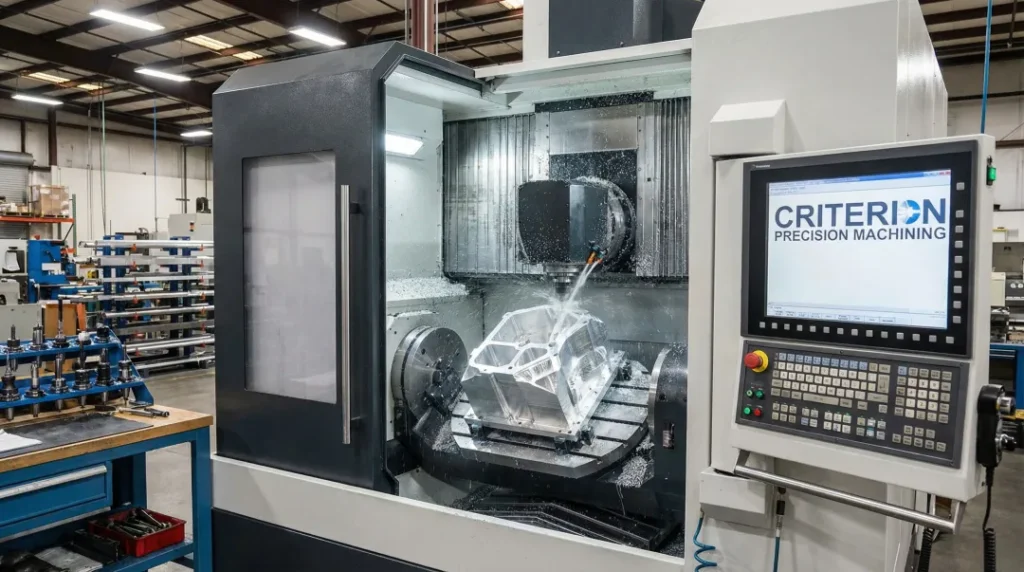
Export packaging for CNC machined parts is the process of protecting precision components against corrosion, impact, contamination, and handling damage during international transportation. For OEM buyers sourcing parts from Vietnam, packaging requirements should be established before production and shipment.
A component can pass dimensional inspection at the factory and still become unusable if it arrives with damaged threads, scratched sealing surfaces, corrosion, or mixed part numbers.
Packaging is therefore part of manufacturing quality, not simply a shipping activity.
Why Precision CNC Parts Need Specialized Export Packaging
CNC machined components can contain sensitive features such as:
- Precision bores and shafts
- External and internal threads
- Sealing surfaces
- Thin walls and sharp edges
- Anodized or plated finishes
- Cosmetic surfaces
- Critical assembly interfaces
These features can be damaged by vibration, contact between components, moisture, or unsuitable packaging materials.
The appropriate packaging method depends on component geometry, material, weight, surface condition, transportation method, and storage environment.
1. Prevent Metal-to-Metal Contact
One of the most common packaging risks is allowing precision components to move against each other during transportation.
Metal-to-metal contact can cause scratches, dents, damaged edges, and surface defects.
Possible protective methods include:
- Individual compartments
- Protective sleeves
- Plastic trays
- Foam separators
- Part-specific dividers
- Protective caps for threads or sensitive features
For high-volume components, packaging should balance protection, packing efficiency, unpacking time, and cost.
The objective is to prevent unacceptable contact without introducing unnecessary handling complexity.
2. Protect Against Corrosion
Corrosion risk depends on material, surface condition, humidity, exposure time, and packaging environment.
Carbon steel components may require greater attention to corrosion protection than some corrosion-resistant materials.
Depending on the part and customer requirements, protection may involve:
- Suitable temporary corrosion inhibitors
- Vapor corrosion inhibitor materials
- Moisture-barrier packaging
- Desiccants
- Controlled cleaning and drying
- Appropriate storage conditions
Protective materials must be compatible with the component and its intended application.
For example, an oil-based protective film may be unsuitable for parts that require oil-free assembly or specific cleanliness standards.
The customer and supplier should agree on any cleaning requirements before shipment.
3. Protect Threads and Critical Surfaces
Threaded components, precision bores, and sealing features may require localized protection.
Thread caps, sleeves, or other suitable protective materials can reduce the risk of damage during packing and handling.
Critical surfaces should be identified in the drawing or packaging specification.
A packaging method that is acceptable for a general mechanical bracket may be unsuitable for a precision hydraulic or sealing component.
4. Design Packaging for the Shipping Method
Air freight and sea freight can expose goods to different handling, storage, and environmental conditions.
For long-distance ocean transportation, buyers should consider moisture exposure, condensation risk, container conditions, and extended transit or storage periods.
For air freight, packaging weight, dimensional efficiency, and handling protection may be particularly important.
Regardless of transport mode, packaging must protect the parts throughout the complete logistics chain, including loading, unloading, warehousing, and final delivery.
5. Establish Clear Identification and Traceability
Packaging should support efficient receiving inspection and inventory management.
Depending on the customer program, package labels may identify:
- Customer part number
- Manufacturer part number
- Drawing revision
- Quantity
- Production batch or lot
- Purchase order reference
- Packaging date
- Country of origin, where required
Mixed revisions or part numbers should be avoided unless the packaging and identification method has been explicitly approved.
Clear labeling reduces receiving errors and helps maintain traceability.
6. Define Packaging Requirements During RFQ
Export packaging can affect the total cost of precision CNC parts.
Specialized trays, protective caps, corrosion-prevention materials, and custom cartons may require additional materials and labor.
For an accurate quotation, buyers should provide:
| Requirement | Information to specify |
|---|---|
| Part protection | Critical surfaces and features |
| Packaging quantity | Parts per bag, tray, or carton |
| Corrosion protection | Required method and storage duration |
| Cleanliness | Oil, residue, and contamination limits |
| Labeling | Part number, revision, lot, and quantity |
| Shipping | Destination and transportation method |
| Handling | Weight limits and special instructions |
Packaging should be agreed before production rather than added as an unexpected requirement immediately before shipment.
7. Verify Packaging Before the First Shipment
For new OEM components, a packaging trial can help identify practical risks.
The supplier and customer may review:
- Whether components are adequately separated
- Whether critical features are protected
- Whether labels are clear
- Whether cartons are suitable for handling
- Whether corrosion protection meets the specified requirement
- Whether the customer can unpack parts efficiently
Where necessary, customers may require transport validation or specific packaging tests.
Packaging approval should be based on the actual component and expected shipping conditions.
How TDB Hanoi Supports International CNC Manufacturing
TDB Hanoi manufactures precision CNC components in Hanoi, Vietnam, for global B2B customers.
Our capabilities include CNC milling, CNC turning, automated lathe machining, and suitable integrated manufacturing programs.
Packaging and shipping requirements can be reviewed as part of the customer RFQ and manufacturing scope.
TDB Hanoi supports manufacturing programs with ISO 9001:2015 quality management, more than 50 CNC machines, and production capacity of up to 200,000 parts per month.
For projects requiring coordinated production and delivery activities, explore our Turnkey Manufacturing Services.
Frequently Asked Questions
What is the best packaging for precision CNC machined parts?
There is no universal best method. Packaging should be selected according to the part’s material, geometry, surface requirements, weight, shipping conditions, and customer specifications.
How can CNC parts be protected from corrosion during sea freight?
Depending on the material and application, protection may include suitable corrosion inhibitors, moisture barriers, desiccants, and controlled cleaning and drying.
Should CNC parts be individually packaged?
Individual protection may be appropriate for sensitive surfaces or geometries. Other components can be packed in separated trays or compartments when sufficient protection is maintained.
Does export packaging affect CNC machining cost?
Yes. Packaging materials, protective treatments, labor, carton dimensions, and shipping weight can influence total delivered cost.
Request a Quote for CNC Machined Parts from Vietnam
We can review the manufacturing and applicable packaging requirements before quotation.
TDB Hanoi — Precision Engineering. Made in Vietnam. Built for the World.