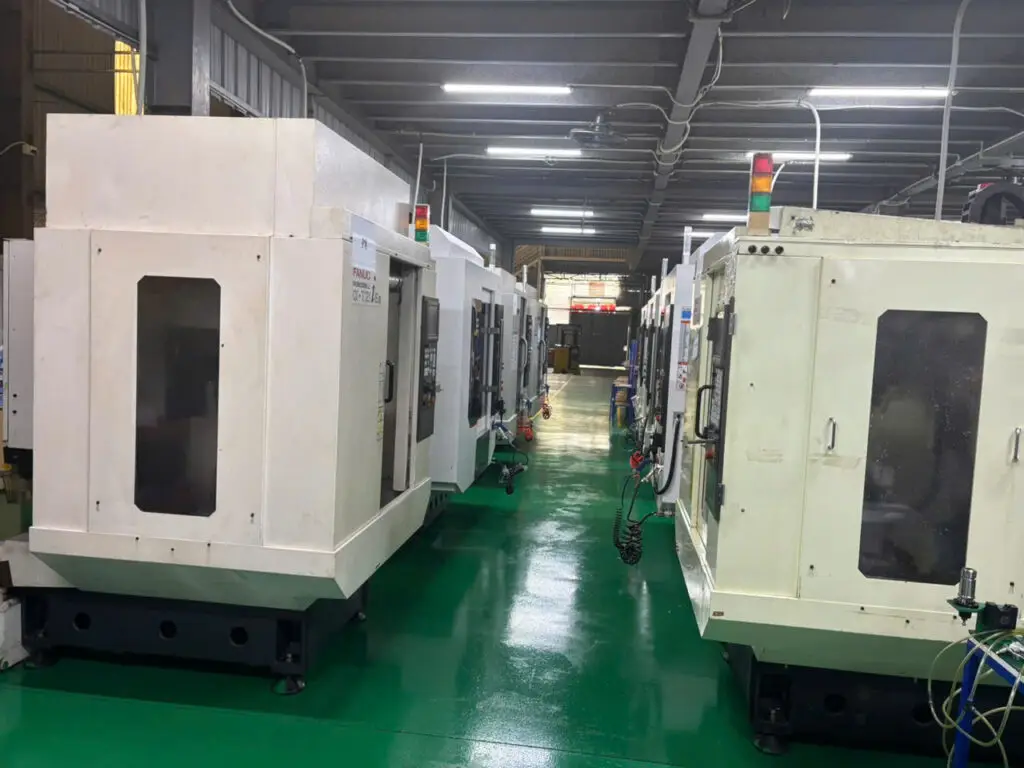
Mold relocation—often referred to as mold transfer—is a specialized mold transfer service offered by factories to enable the reuse of existing tooling across different production sites. On the one hand, it may appear that relocation of molds is a process involving merely changing the location of the molds in the factory and moving them to another factory. In reality, it is far more complex. Decisions during relocation affect the quality of products, stability in production, and lead times, as well as ownership of products [1]. This compilation has a strategic question, to which every business must first find an answer: under what practical and defensible driving forces does mold relocation genuinely make sense?

When to Consider Mold Relocation
The decision to pursue the course of action concerning the relocation of mold should be grounded in properly outlined operational, strategic, and financial drivers. Unlike the new mold fabrication that is usually explicated by the long-term production plan, it is most appropriate to relocate the mold in instances where the enterprises are bound, or an opportunity that demands speed, adaptability, or conservation of the assets.
One of the most widespread and reasonable drivers is regarded as a short-term production capacity adjustment. This happens when capacity is temporarily disrupted by another supplier, such as a machine failure or manpower, or factory upgrading or reprioritization of the capacity of the incumbent supplier to a more profitable program. In such cases, mold relocation can be used as a strategic compromise, allowing the process to continue in a new plant, and lead time and other tools would not be necessary to build new tooling. It is worth noting that this use case assumes that the capacity shortage is a temporary phenomenon, and the cost of relocation is offset by the cost of interrupted supply.
The other emergency scenario is the establishment of the emergency supply chain backup. The price of a lengthy stop in production might be very high compared to the price of relocating a mold in a case where you have a high revenue. Companies are therefore able to choose to either prevent or react to risks that may be caused by the bankruptcy of the suppliers, geopolitical upheavals, trade restrictions, natural disasters, or unexpected compliance failures. In this, not only is the cost involved in the relocation of molds, but also the aspect of risk management and survival of the business.
Trial Production and Strategic Sourcing Considerations
Mold relocation is also frequently considered for low-cost trial production and market validation [2]. This approach allows companies to validate logistics, quality performance, and customer acceptance before committing to new mold fabrication. However, this justification is only valid when the trial volume is limited, and the relocation costs are clearly lower than the combined cost of new tooling and delayed market entry.
There are also strategic considerations that deal with restructuring the suppliers and reducing the footprint. The reason is that firms that have adopted supplier consolidation, regionalization, or nearshoring programs may wish to consider relocating molds as a broader manufacturing realignment. The long-term sourcing strategy in this instance is usually not at risk and should be undertaken with very high cost and risk evaluation so as to enable relocation to meet the future state supply chain objectives.
Mold Relocation Myths and Critical Decision Factors
Despite these rightful reasons, there is a myth that has passed like wildfire across the board and must be mentioned. The presence of the current mold is not necessarily translated into a low-cost or low-risk solution. Economic cost in general is, in many cases, highly overestimated by the tunnel vision of organizations on the tooling cost avoidance, even though the transportation risks, engineering adaptation, commissioning effort, production lost-time, and quality requalification are not considered. The second reason that contributes to budget overruns and schedule delays is the perception of the relocation of the mold as a simple change of assets and not an industrial project on a large scale.
It is the reason why the relocation of the molds can be considered only when the fanatics that are driving it to be relocated are convincing, articulate, and have a well-developed analysis of the overall cost, practicability, and risk, stated and supported by a rigorous analysis of the total cost, feasibility, and risk. Without this kind of discipline, the relocation decisions are highly likely to give short-term relief at the expense of long-term functioning stability.
Challenges and Solutions in the Mold Relocation Process
Logistics and Physical Damage Risk
One of the most significant problems in the sphere of mold relocation is the danger of logistics and physical damage. In order to prevent such a risk, professional-quality packaging at the engineering level must be used rather than conventional freight solutions. The best practices include the custom-designed shipping containers, environmental protection, the selective dismantling of sensitive parts in order to ship them independently, and a wide scope of insurance of the real replacement value of the mold.
Technical Standards and Equipment Incompatibility
The second issue is that of incompatibility between the technical standards and equipment. The molds are generally ordered to match particular sizes of machines, clamping, cooling, hydraulic, and electrical requirements. Any failure to do so in the case of any transfer to a new factory can lead to delays during installation or unsuitable conditions during processing. The most effective mitigation strategy is a pre-move mold–equipment compatibility audit. Such an analysis identifies the interface conflicts that might occur in advance. It helps the project team to plan, budget, and schedule the required changes, such as a change in the position of rings, oil circuit, or electrical connector.
Process Commissioning and Quality Restoration
Process commissioning and quality restoration are another threat. Even with a mechanically compatible and whole mold, there is no assurance that a similar quality level can be acquired. Such changes in the performance of the part may be caused by the variation of machine dynamics, material batches, and environmental conditions. Installation and operation certification is a requirement that is to be set up in a bid to overcome this. This includes moving the whole validated process parameters, history of previous quality, and tooling details, and then continues to inspect first-article components in full dimension to ascertain their compliance with specifications.
Project Management and Schedule Overruns
Finally, non-relocated to molds projects have been prone to project management failures and schedule overruns. With the lack of clear ownership and planning, delays are almost inevitable. It requires a comprehensive project plan, responsibilities that are clearly spelled out, and timelines that are realistic. It is not common to encounter that the risk of execution can be reduced through outsourcing to a mold transfer service provider that has a turnkey facility, because accountability is centralized with a project manager.
Mold Relocation Versus New Mold Fabrication
An example of this is the direct analogy of relocation of mold and new mold fabrication, which will explain the trade-offs of the same, particularly in the consideration of distance.
| Dimension | Local Mold Relocation | Cross-Border Mold Relocation | New Mold Fabrication |
|---|---|---|---|
| Initial Capital Investment | Low to Moderate | Moderate to High | High |
| Time to Start of Production | Short to Medium | Medium to Long | Long |
| Logistics And Regulatory Risk | Low | High | Minimal |
| Engineering Modification Risk | Medium | Medium to High | Low |
| Quality Requalification Effort | Medium | High | Medium |
| Long-Term Scalability | Limited by Existing Design | Limited by Existing Design | High |
Localized relocation of molds is less logistically demanding and unregulated and may take shorter times to redeploy compared to cross-border mold relocation. The new production involving more capital and a prolonged lead time capacity is scalable over a longer term of time, better design for the specific facility, and less uncertainty in operation.
How to Make the Right Decision
The right strategic decision would involve an effective decision making process to determine the mold relocation decision as the right strategic decision. The first step is motivation evaluation since organizations must confirm that their core drivers are legitimate and sufficiently strong [3]. The second involves a total cost accounting whereby the visible costs are not only counted, but also the downtimes, engineering resources, quality checks, and contingency allowances.
Then, companies ought to appraise their risk tolerance and internal ability to cope with the ills of logistics, technical matching, and the integration of the projects [4]. Finally, it should be compared in the first place, the overall cost, the lead time, and the risk profile of the relocations of the molds should be compared with the new mold fabrication.
In particular, one should mention the fact that the move of cross-border molds should be regarded as an exception and a rather limited case. They are normally authentic and highly unique molds of paramount worth and in the best condition, or when one requires emergency reaction to a severe supply chain crisis. In every other case, the strategic as well as operational risks tend to supersede the perceived short-term benefits of relocation.
References
[1] Sussex (2025). Warning Signs it is Time to Move a Mold. https://www.sussexim.com/warning-signs-its-time-to-move-a-mold/
[2] Metro Custom Plastics (2025). Mold Transfers/ Tooling Transfers. https://www.metrocustomplastics.com/service/mold-transferstooling-transfers
[3] Ferriot (2025). Seven Key Points to Consider When Transferring Injection Molds from Suppliers. https://www.ferriot.com/wp-content/uploads/2022/11/FER-7-Key-Points-Mold-Transfer-v03.pdf
[4] Rosti (2025). How to Implement an Efficient Injection Molding Tool Transfer. https://www.rosti.com/resources/blogs/how-to-implement-an-efficient-injection-molding-tool-transfer/